
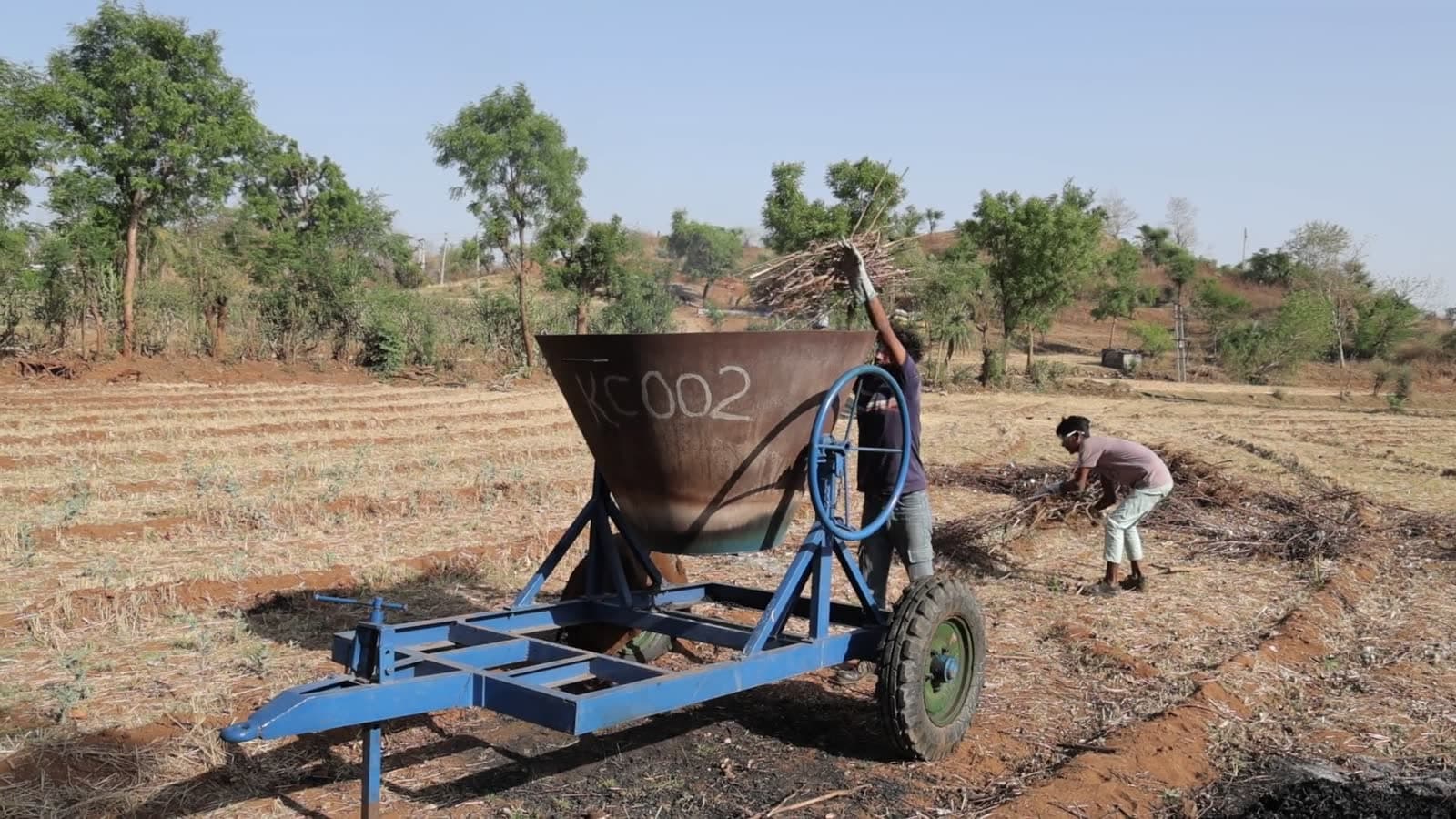
Carbon sequestration · Rural India
We turn farms into measurable carbon sinks.
We turn crop residue into biochar: a stable, charcoal-like carbon that locks CO₂ into farmers’ soil for centuries while improving the land.
- Farmers
- 1000+
- Credits issued
- 3000+
- To rural economy
- ₹1Cr+
Empowering rural India. Healing the planet.
Carbon finance enables practical carbon sequestration on farms, while creating value for soils and rural communities.
How it works
Soil to sink, tracked end to end.
Three phases, one continuous record. Every step is logged on the KriSHE Carbon app before the next one begins.
01 · Diagnose
Know the ground
Before anything goes into the field.
- Map the farmA GPS polygon of every plot, tied to a farmer profile.
- Sample the soilA baseline test on every plot, first.
- Score and prescribeWhat this soil needs, and how much biochar.
02 · Act
Place the carbon
Produce, charge and apply, to a standard.
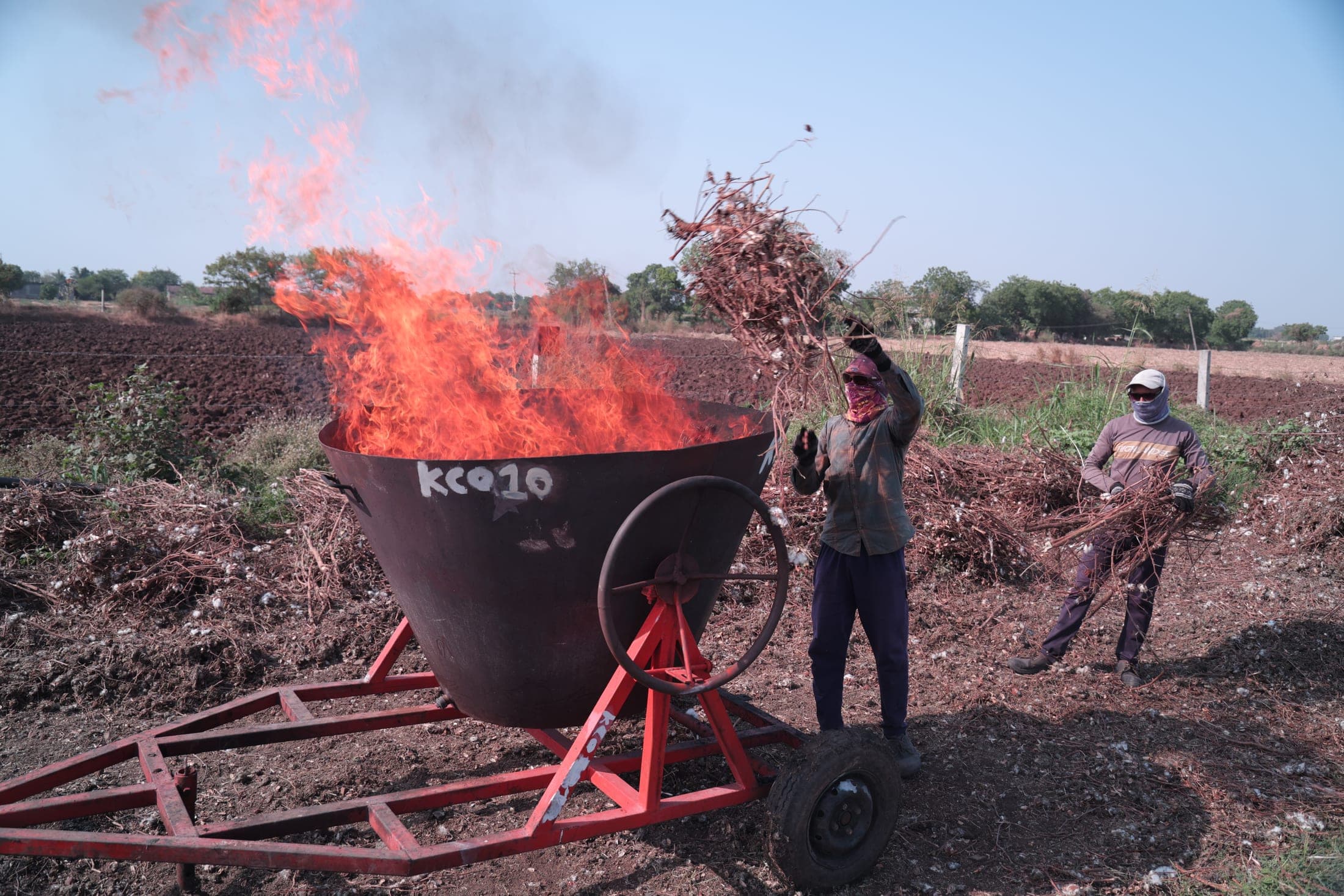
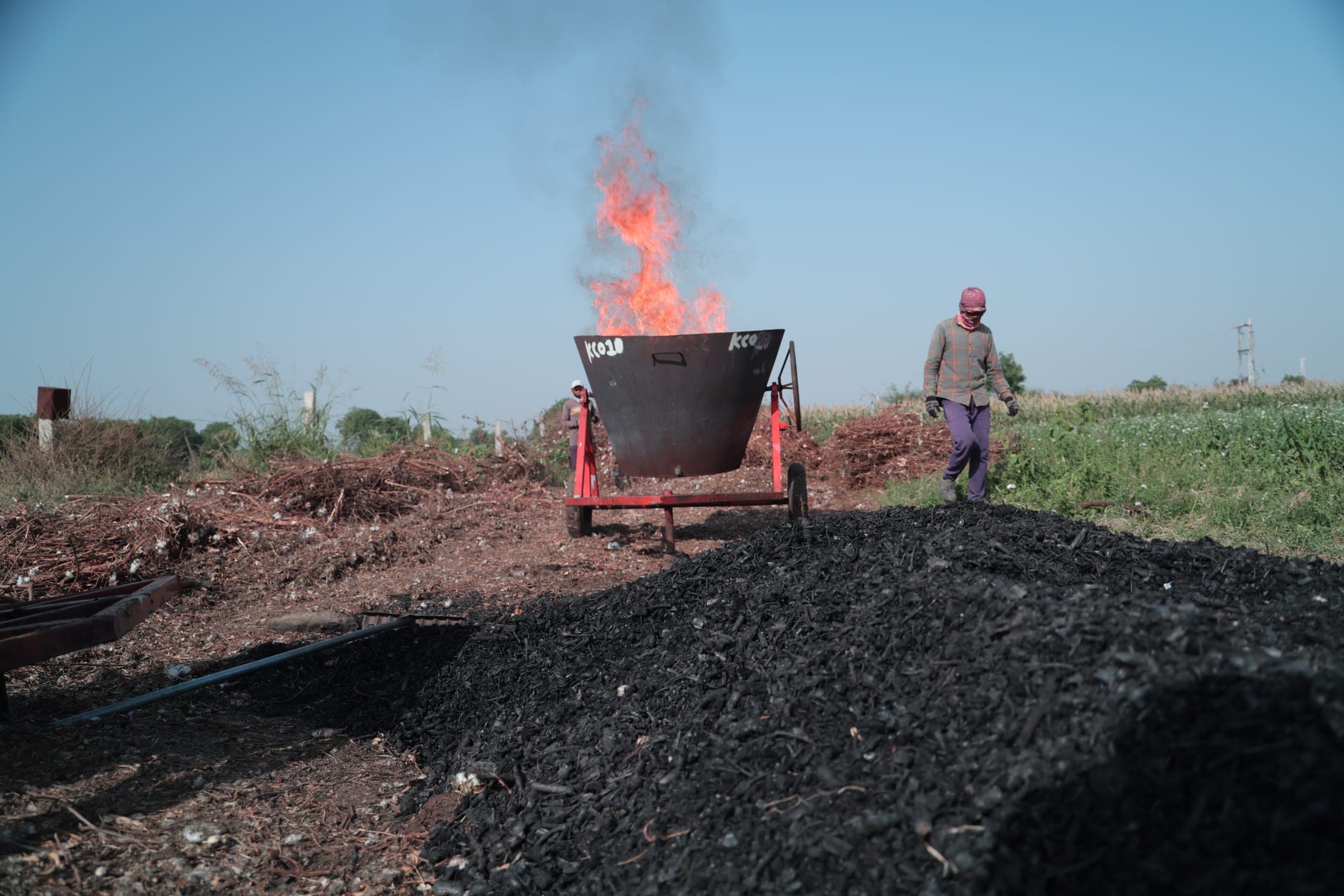
- Make biocharIn modified Kon-Tiki kilns, each batch recorded.
- Charge and mixTo neutral, by a fixed recipe.
- ApplyTo a logged strip of the field, rotated yearly.
03 · Prove
Show the result
Measure, verify and report back.
- Re-testSoil measured again each season.
- CertifyCarbon independently verified and issued.
- ReportAn annual soil-health report for the farmer.
Why we can trust the numbers
Whose land, which soil, which batch.
Last-mile accuracy is the whole point. Four things make it real.
- 01
Every farm is mapped
GPS polygons of each plot, attached to a farmer profile with photo and landholding. We know precisely whose land, and where.
- 02
Every soil is tested first
A baseline soil test before any biochar goes down. We act on what the soil actually shows, not on assumption.
- 03
Every batch is verifiable
Each biochar batch carries a unique ID, GPS and timestamp, with automated checks so no two runs overlap or double-count.
- 04
Every outcome is measured
Soil is re-tested on schedule and carbon is independently certified. The result is a record, not a claim.
Last-mile accuracy
One unbroken chain from kiln to field
- ID
- A unique batch code on every production run.
- GPS
- Location tagged at source.
- Time
- Timestamped and sequence-checked.
- App
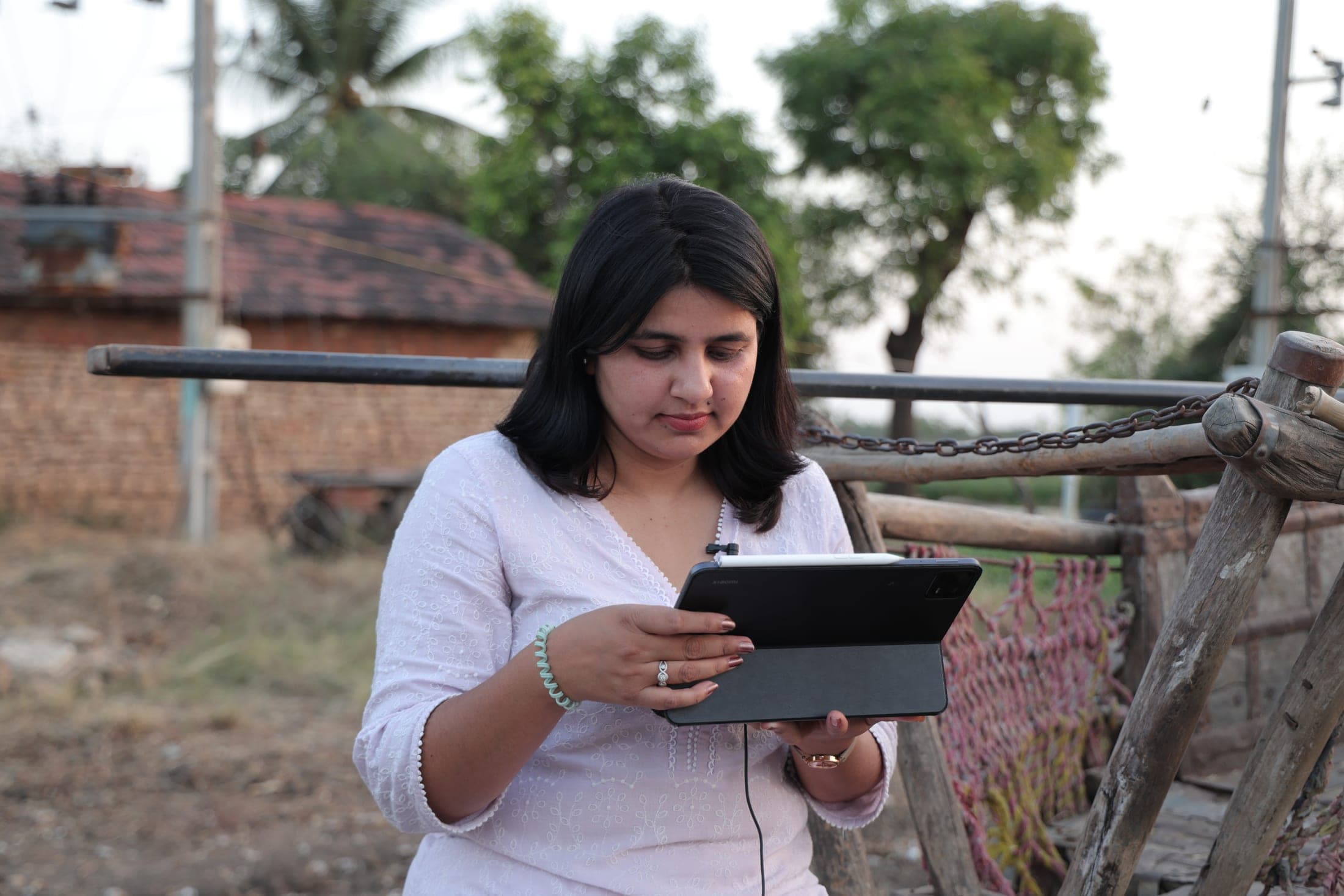
- Entered and verified on the KriSHE app.
Data is collected by trained Climapreneurs and the field team, and verified before anything moves forward.
On the ground · Gujarat
Made on the farm. Recorded at every step.
The kiln goes to the field. The data comes with it.
Why biochar
Trusted worldwide for permanent carbon removal
Biochar is a proven pathway for both carbon sequestration and soil improvement.
Market leader
86% of all durable carbon removal credits delivered since 2022, and 92% of those retired, are biochar.
Source: CDR.fyi, 20251000+ years permanence
Carbon sequestered in soil.
A pathway leading buyers choose
Biochar is a removal pathway chosen by prominent buyers such as Microsoft, Google and Frontier.
Soil benefits
Improves soil health, nutrient retention and water availability.
What makes KriSHE different
Technology, community and fair economics.
- 01
Climapreneurs
Rural entrepreneurs trained to run kilns and lead climate action on the ground.
- 02
Smart kilns
Low-cost, on-farm pyrolysis that cuts logistics and keeps quality high.
- 03
Digital MRV
Geotagged field data and layered verification create traceability from field to credit.
- 04
Farmer-first economics
Carbon finance is structured to create value for farmers and local operators.
One Climapreneur can support ~150 farmers and enable ~100 tonnes of biochar per year.
Impact so far
Measurable climate impact. Real rural empowerment.
Building measurable impact for farms, communities and the climate.
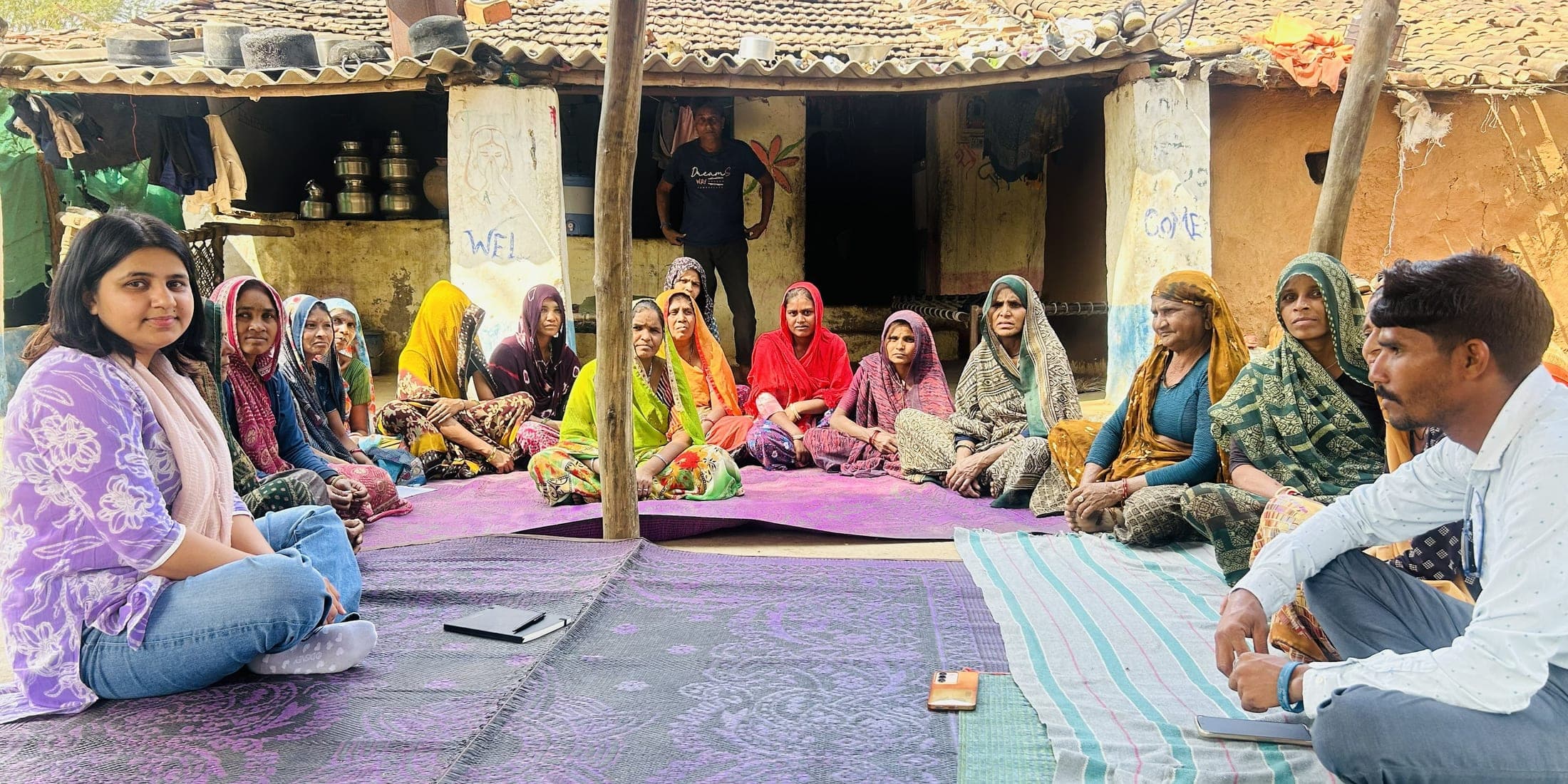
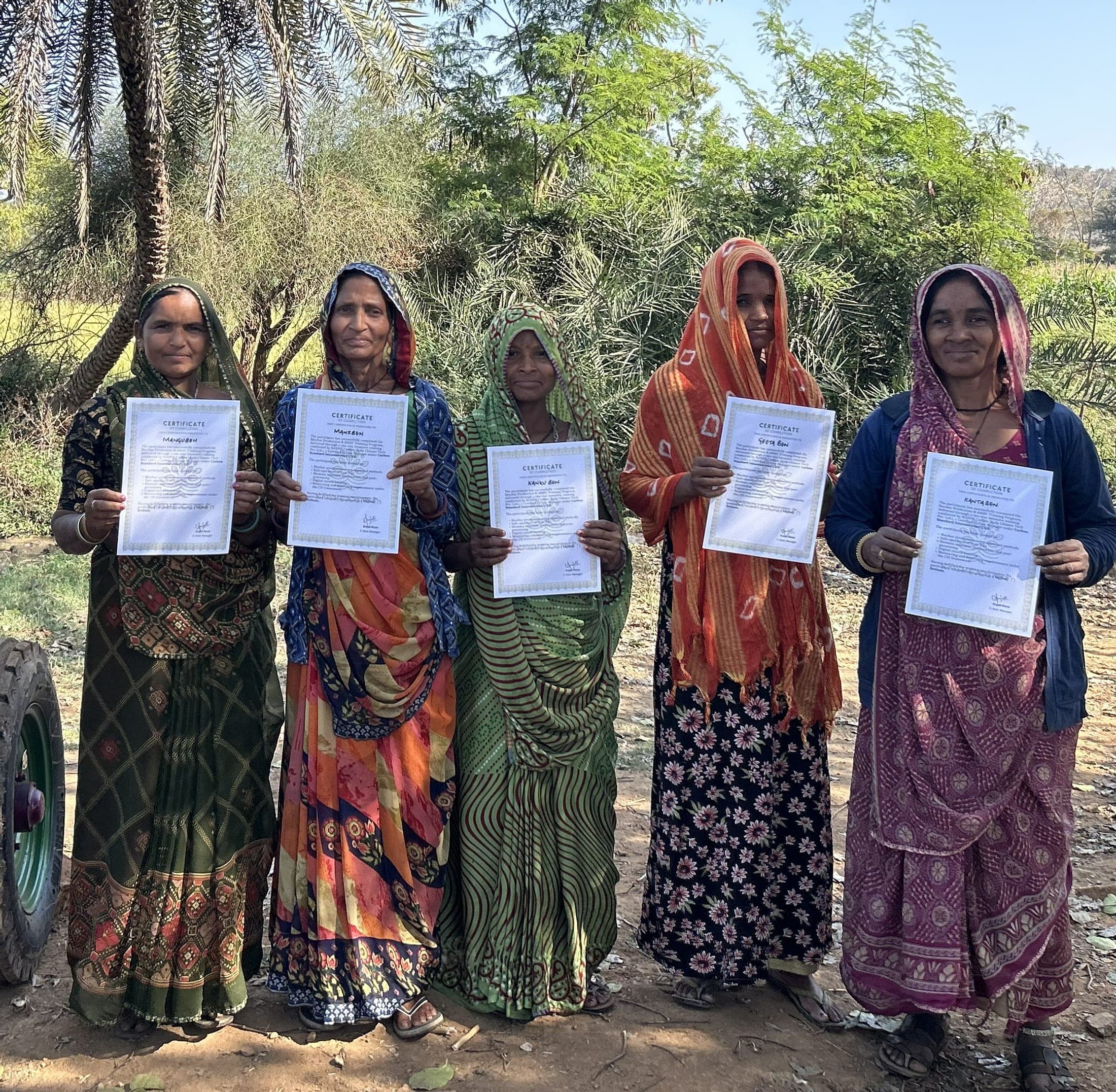
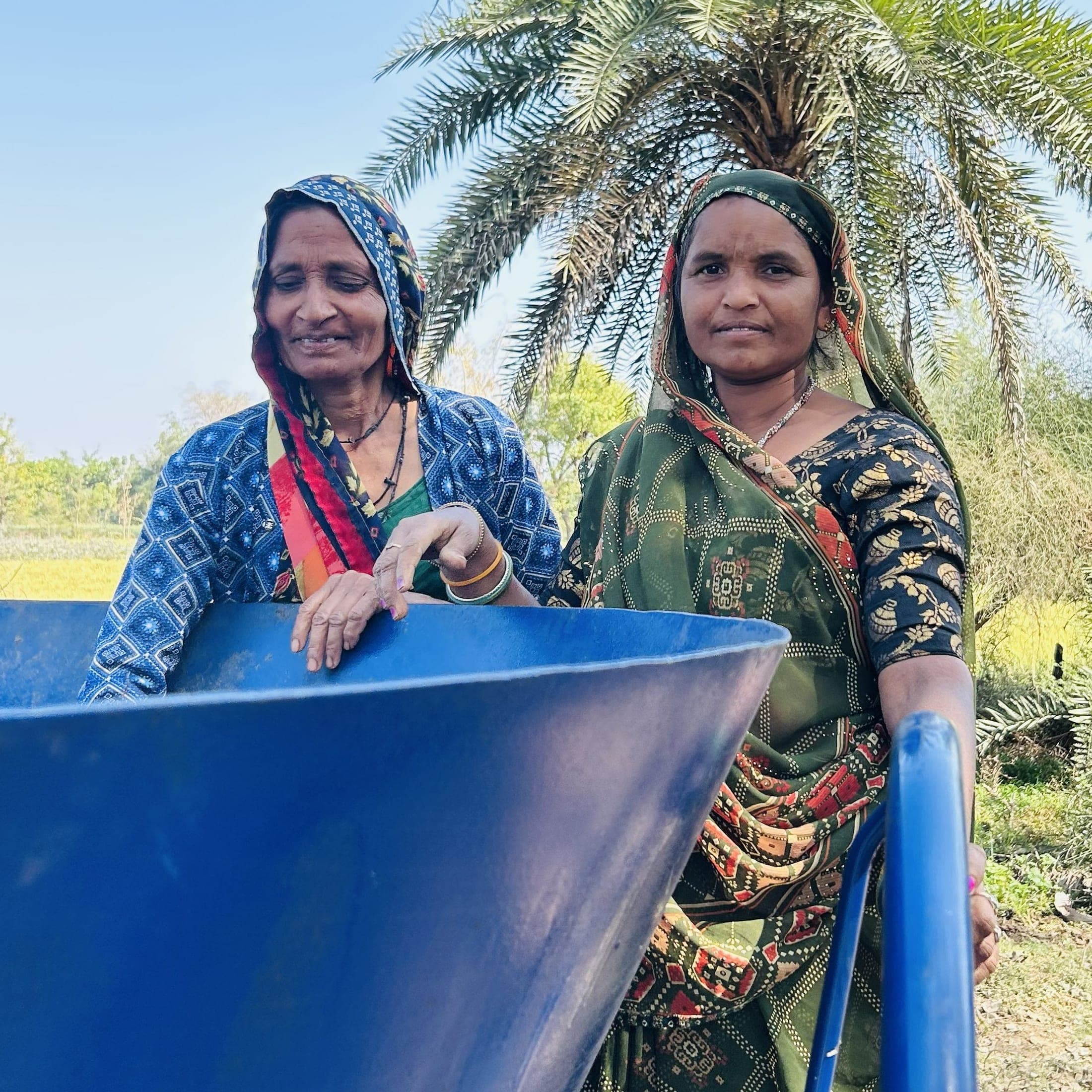
- 011000+
Farmers
Reached through KriSHE’s field network.
- 023000+
Credits issued
3,000 tonnes of CO₂ removed.
- 03₹1Cr+
To the rural economy
New income for rural communities.
- 043
Pilot zones
Across multiple rural regions.
- 05200+
Soil samples
Supporting research on soil carbon and soil health.
- 0630+
Climapreneurs
Trained to run kilns and lead field operations.
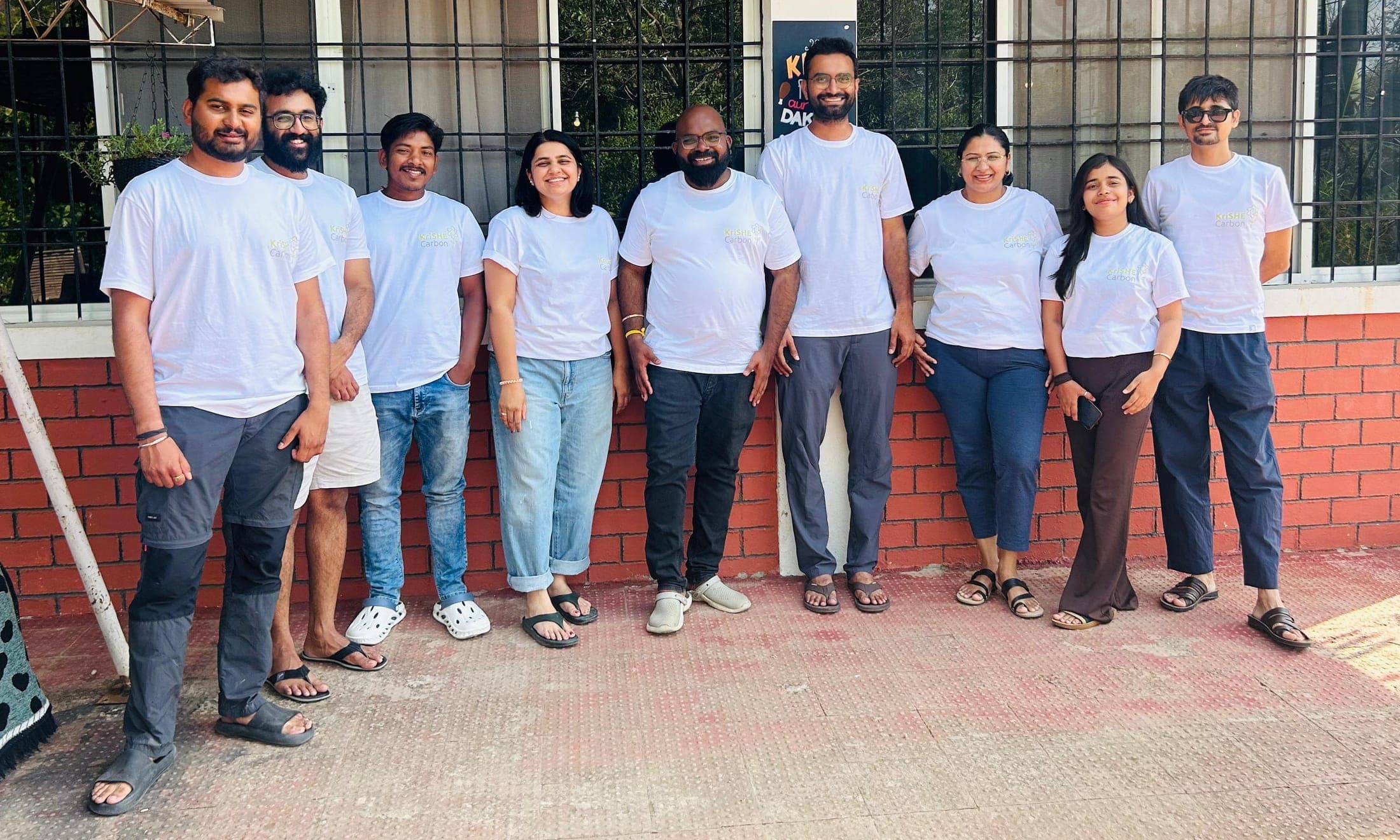
The team
The people behind KriSHE Carbon.
Meet the team driving climate action forward.
Voices from the field
What our partners say
Hear directly from the people building this work on the ground.
- Jeev Ben · Uchdi, Talaja
- Ramubhai · Pasvi, Talaja
- Ramubhai · Pasvi, Talaja
- Manjula Ben · Rani Mata group
- Mani Ben · Rani Mata group
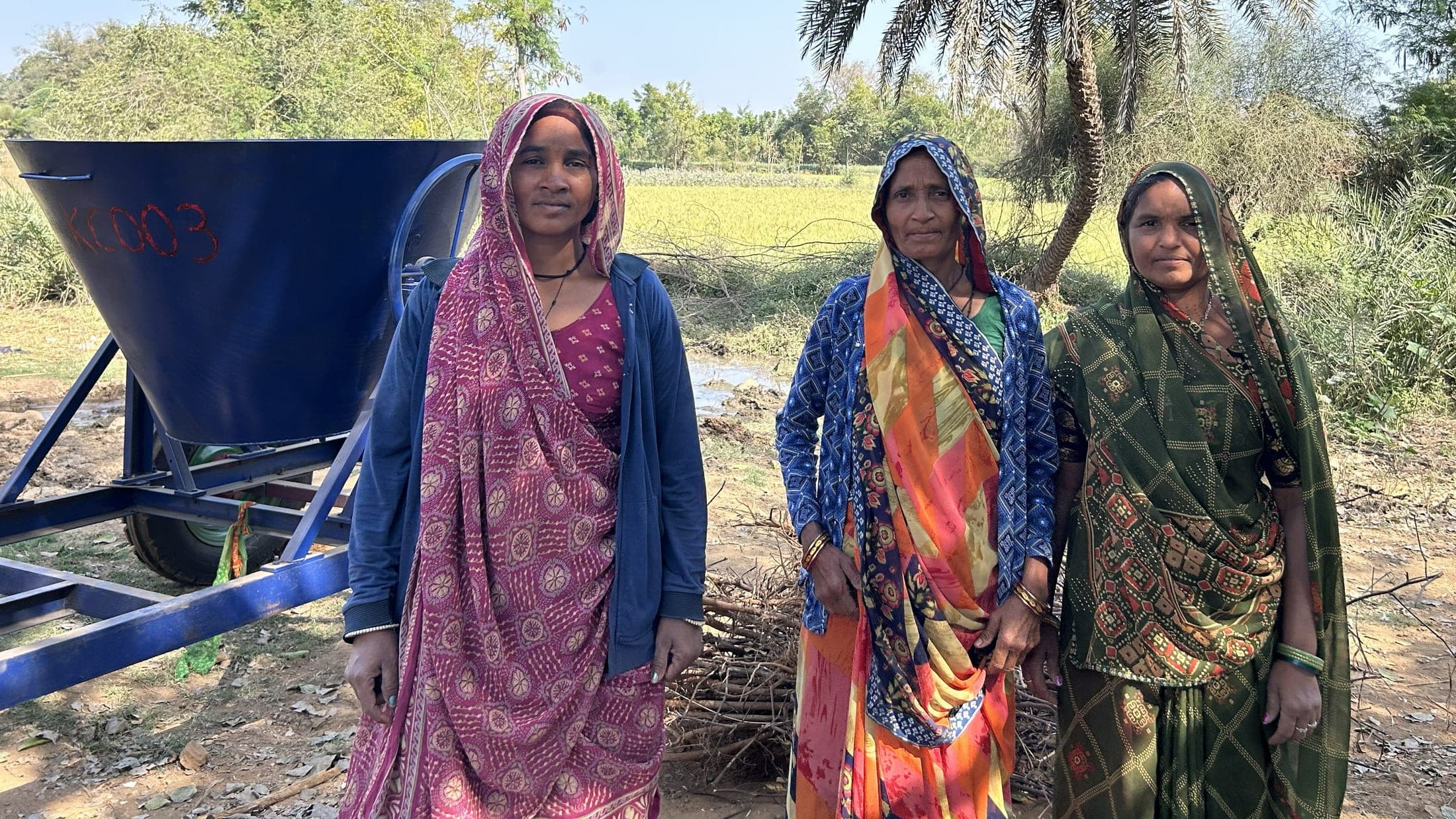
“We made biochar for the first time and applied it on our pearl millet field. We were happy with the result.”
“I never thought that cotton waste could be converted into charcoal like this. We mixed it with farmyard manure and applied it on the field.”
“After we put it in our fields, the farming went well. This time we had sown cotton, and the cotton did well too.”
For buyers
Carbon credits, backed by evidence.
Traceable carbon removal, measured in the field and verified through multiple layers of evidence.
- Verification
- AI-verified applicationData integrity from field to report.
- Monitoring
- Soil-based MRVAudit-grade traceability.
- Revenue
- Farmer-first economicsYour purchase helps finance climate action in rural communities.
- Permanence
- 1,000+ yearsNature-based removal, stored in soil.
Build the carbon economy with us